INDUSTRIAL ARCHEOLOGY
The history of industrialization relies largely on perishable and recyclable materials; industrial buildings, designed for temporary use and specific technologies, last only as long as their intended purpose (like company archives and technical drawings) and are much more obsolete than traditional buildings. Hence the need not only for study, but also for inventorying and preserving what is now considered part of a country's cultural heritage, including for the purposes of museum displays or the reuse, for cultural purposes, of buildings or environments that are historic sites of the industrialization process. In Anglo-Saxon countries, but also in Europe and Italy, in addition to the study and conservation of industrial heritage, significant results have been achieved in the reuse and valorization of industrial buildings, environments, and territories—historic sites of the industrialization process.
Industrial archaeology (IA) is the systematic study of the material evidence associated with the industrial past, referred to as industrial heritage, and includes buildings, sites, and infrastructure associated with the production, manufacturing, extraction, transportation, or construction of a product or range of products. The field of industrial archaeology encompasses a range of disciplines, including archaeology, historic conservation, museology, and other specialties, with the aim of reconstructing the history of past industrial activities.
Industrial archaeology is the systematic study of the material evidence of the industrial past, including factories, sites, and infrastructure. This interdisciplinary discipline (combining archaeology, architecture, history, and engineering) examines existing structures and archaeological sites, often through excavations, transforming old industrial complexes into cultural centers, or preserving areas. It seeks to recover incomplete industrial histories through the analysis of physical and architectural artifacts.
We provide a wide range of professional services to meet your needs.
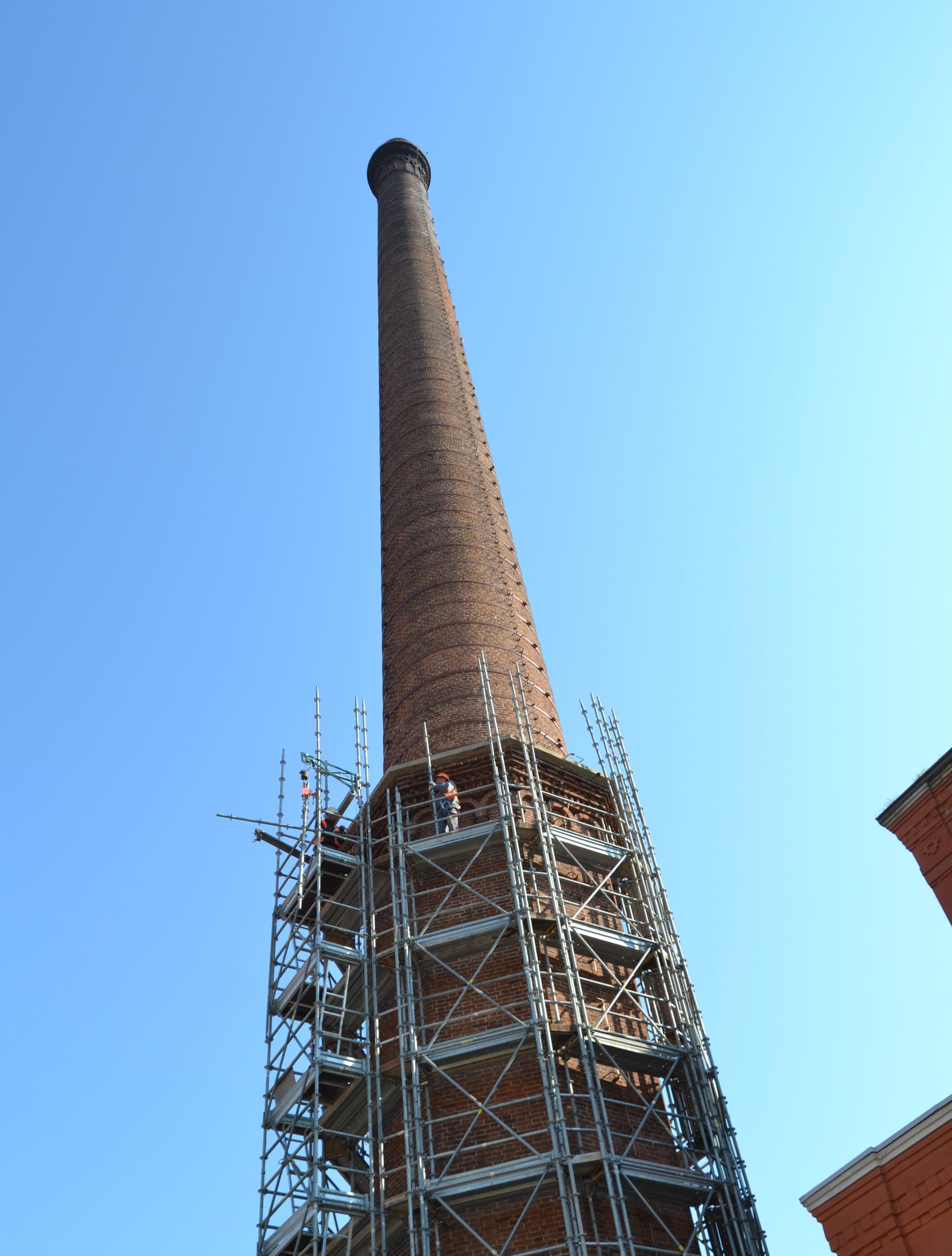
IN THIS UNIQUE AND PRESTIGIOUS PROJECT WE HAVE ATTENDED THE FOLLOWING CONSERVATIVES OPERATION.
CRESPI BELONG TO THE UNESCO WORLD HERITAGES SITE
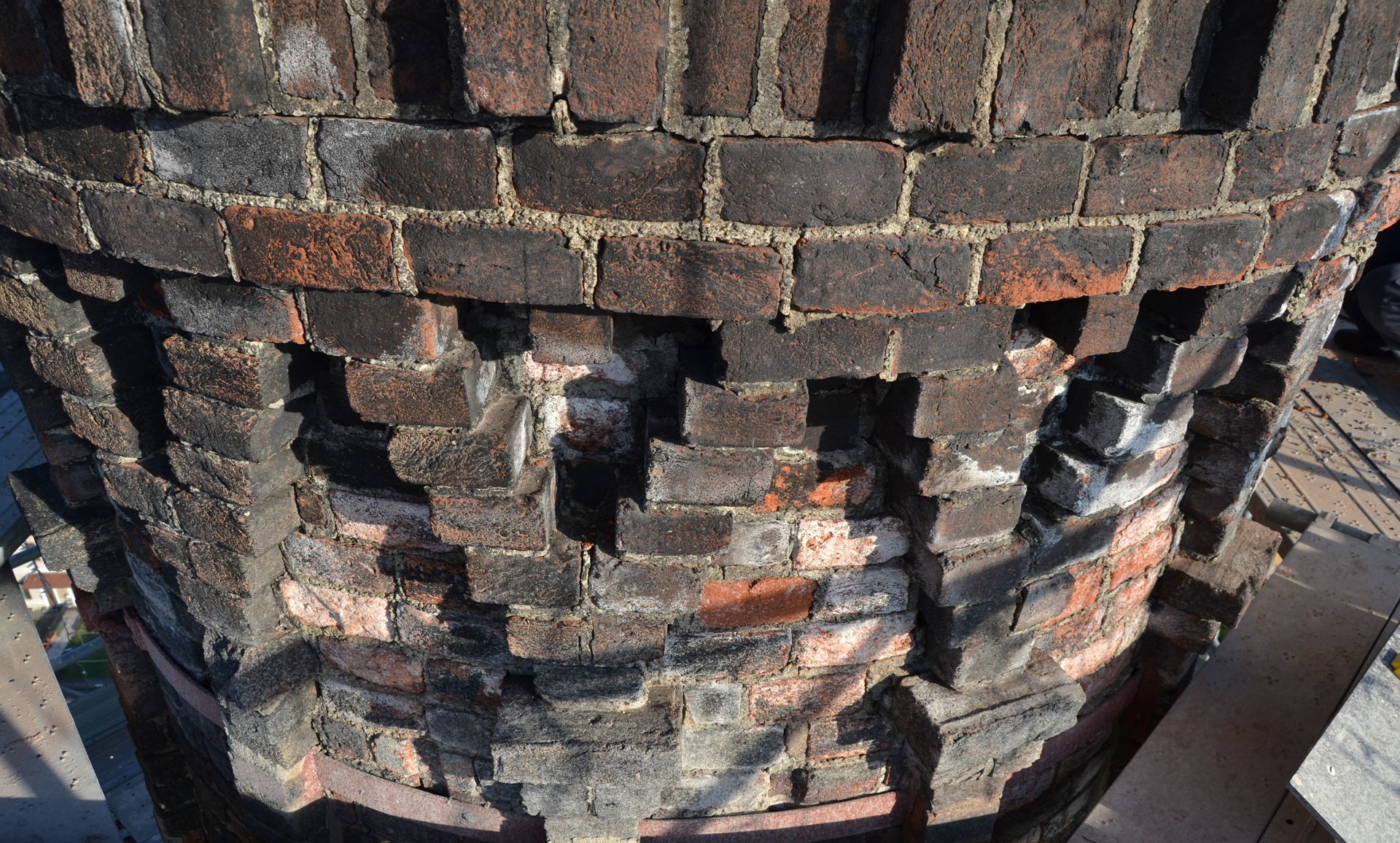
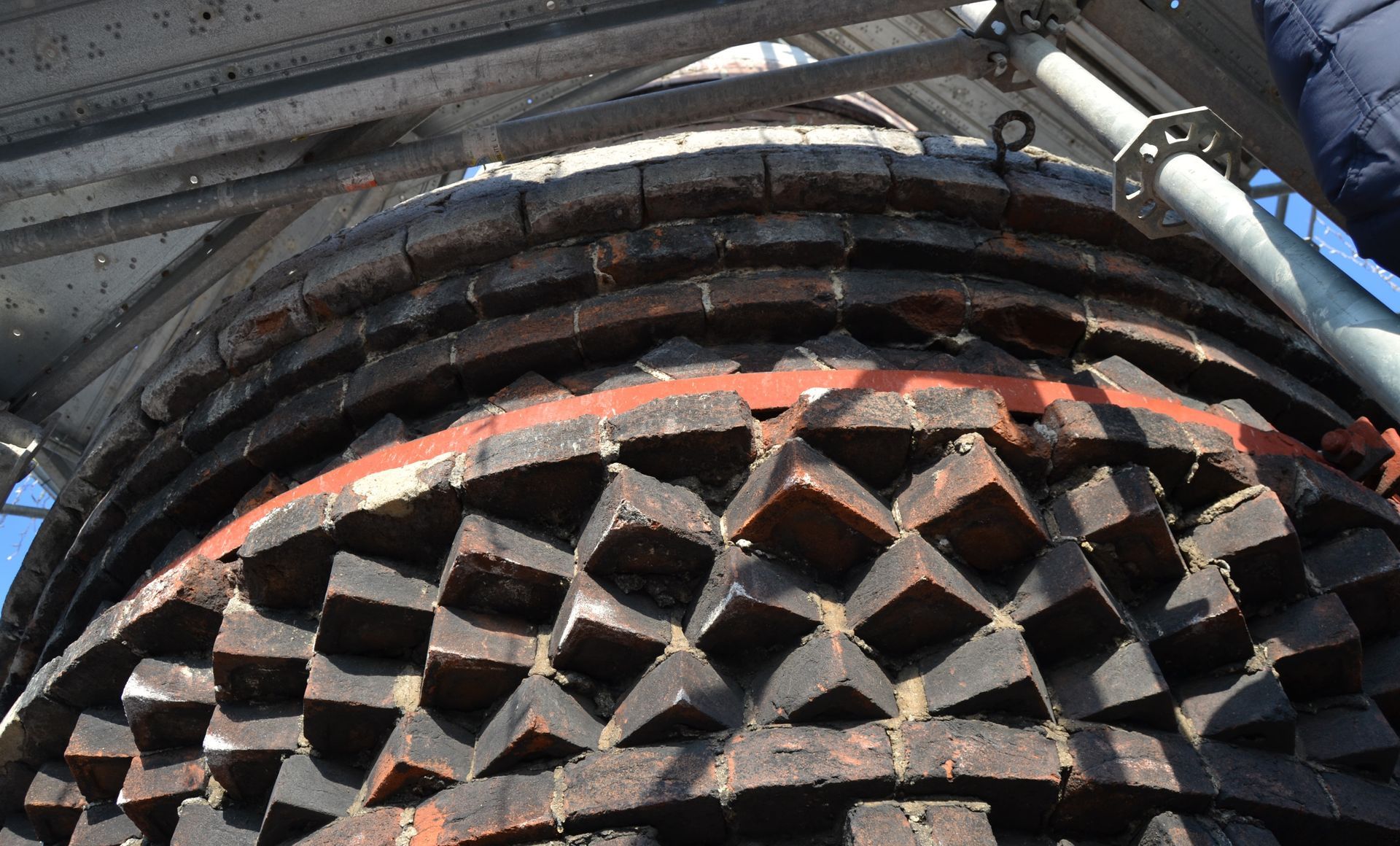
The materials used for the construction of the chimney are bricks, porous paste materials. These artefacts have suffered more from the interaction with external agents (endogenous and exogenous) their surface, already deeply characterised and marked superficially by possible erosion, becomes, once in operation, the ground of a series of modifications, linked to the conditions and determined by the exposure of atmospheric agents. In the first place, in contact with the air, there is a variation in the chemical and physical characteristics of the surface, where a more or less smooth oxidised patina is formed over the years. The patina can exert a protective action on the exposed material, determining the chromatic patina and ultimately, characterises its aesthetic effect. The natural patina is the product of a slow process of microvariations and is therefore a peculiarity of the historical material; not only that, but its formation on bricks and mortars exposed to the current urban atmospheres is totally prejudiced by the action of pollutants that cause a deterioration of the outer layers much faster than the genesis of the patina.
The purpose that every cleaning operation, regardless of the chosen system, must be aimed at is to remove from the surface any type of inconsistent deposit, with regard to the removal of inconsistent deposits present on surfaces that, unlike crusts, do not affect the chemical nature of the bricks, it was carried out using simple mechanical systems, easy to apply such as sage brushes, brushes, etc. The conservative intervention operation itself was simple by exerting a light pressure by rubbing the surfaces with constant pressure passes with brushes and soft brushes always following the same pressure, in the presence of particularly stubborn surface dirt allowed the repeated execution of the intervention